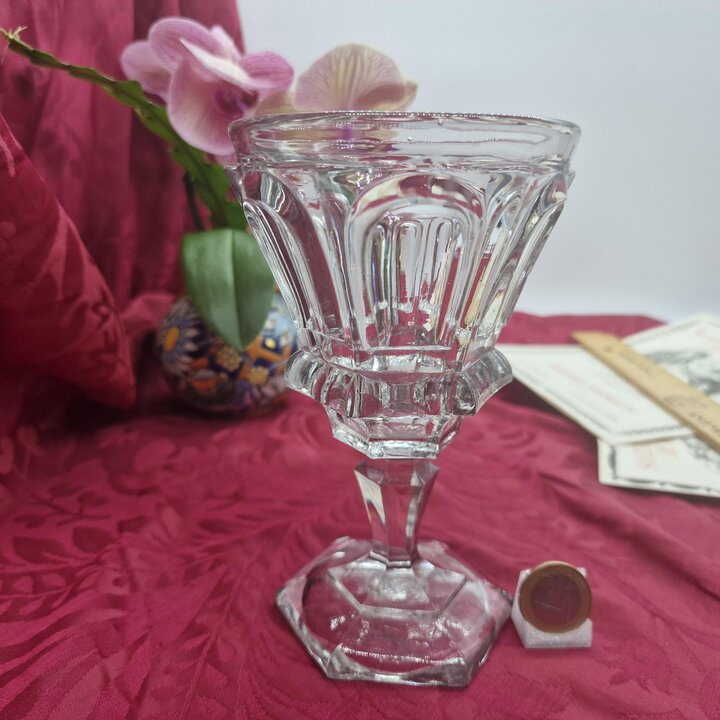
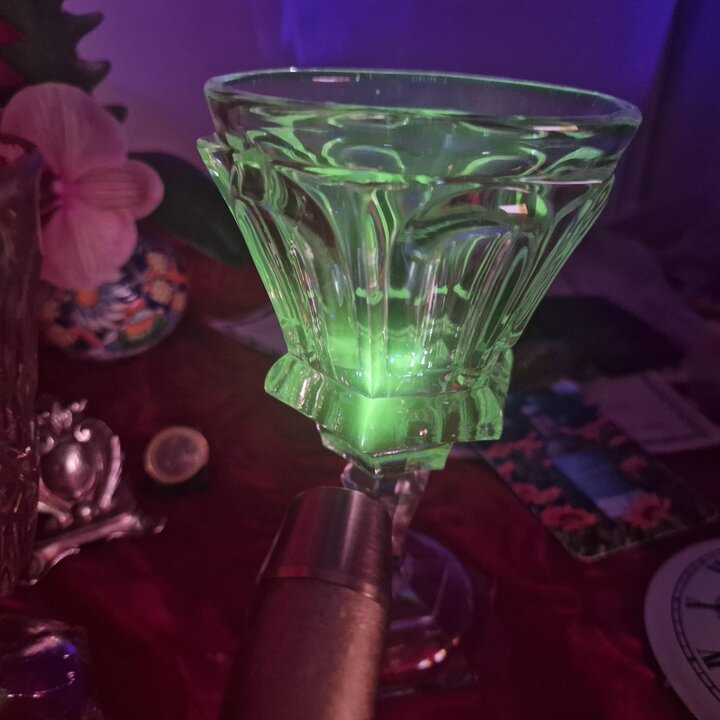
An antique pressed glass goblet of the 'lafitnik' type, dating to the first quarter of the 20th century. This item is distinguished by its green fluorescence when exposed to ultraviolet light.
Historically, manganese dioxide was utilized in glassmaking during the late 19th and early 20th centuries as a decolorizer to counteract the natural green tint caused by iron impurities in raw sand. Clear glass formulations of this era, prior to the widespread industrial adoption of selenium in the 1920s, typically exhibit this characteristic green reaction under UV light, verifying its period-accurate composition.
Details and specifications:
* Period: First quarter of the 20th century (ca. 1900–1925)
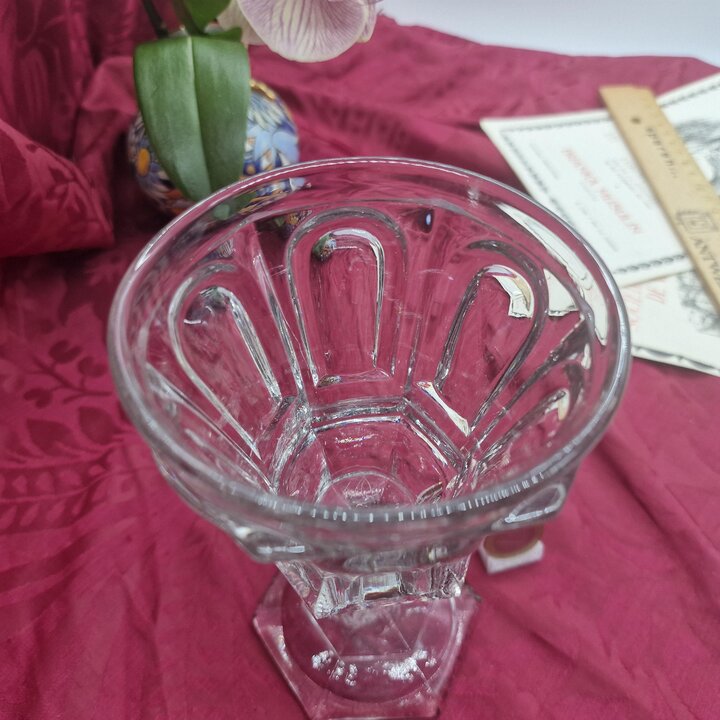
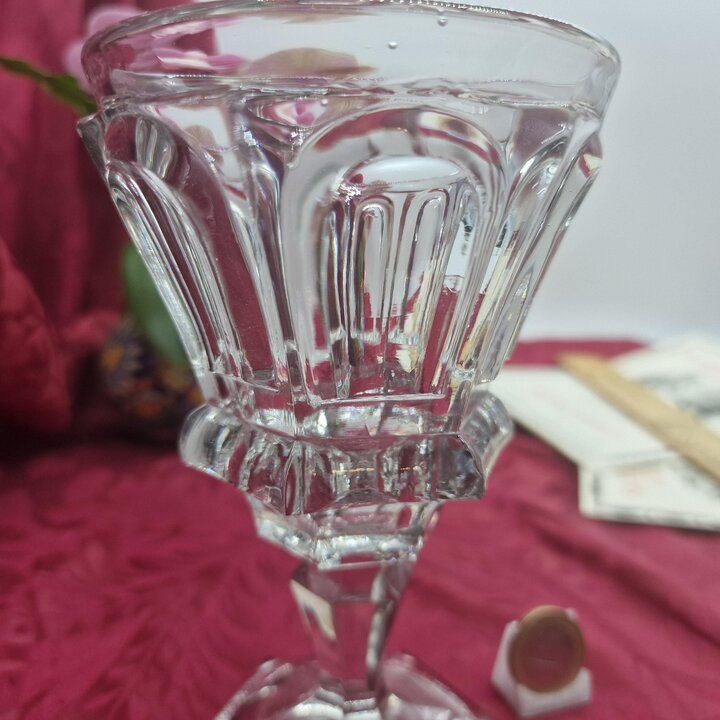
* Technique / Style: Pressed glass with arched vertical panels on the bowl, a faceted stem, and a thick hexagonal foot
* Size: Height: 15.0 cm (5.9 inches); top diameter: 8.5 cm (3.3 inches); base diameter: 8.5 cm (3.3 inches); volume: approx. 120 ml (4.0 oz)
* Material: Manganese-clarified soda-lime glass
* Condition: Excellent antique state. No chips, cracks, or restorations. The glass body exhibits minor manufacturing micro-bubbles and slight cooling marks characteristic of early pressed glass production.
This goblet is of significant interest to collectors of early pressed glass, UV-reactive glassware, and historians studying the transition of clarification techniques in glass manufacturing.
Legal notice: This product is a vintage collectible item. Due to its age (art. 115 ter. 4 TRLGDCU), the store does not guarantee the preservation of its original performance properties (original scent, texture, durability, safe composition, and others). The product is not intended for direct use/application, is sold "as is", and is exclusively for collection or decorative purposes.





Comments (0)
Your review appreciation cannot be sent
Report comment
Report sent
Your report cannot be sent