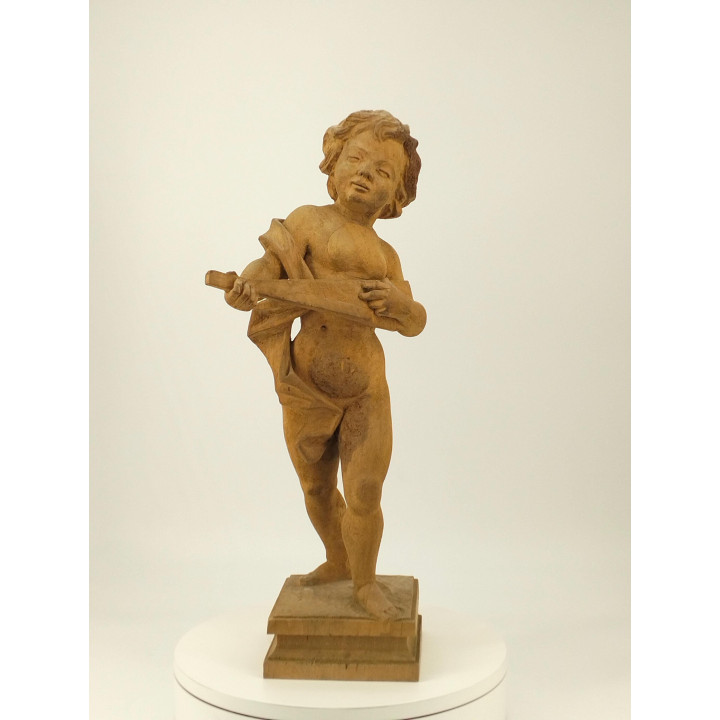
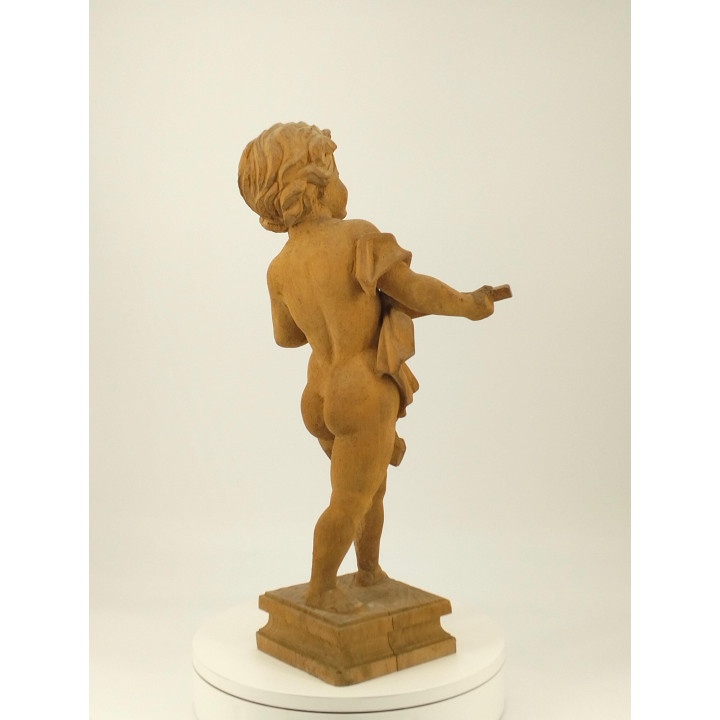
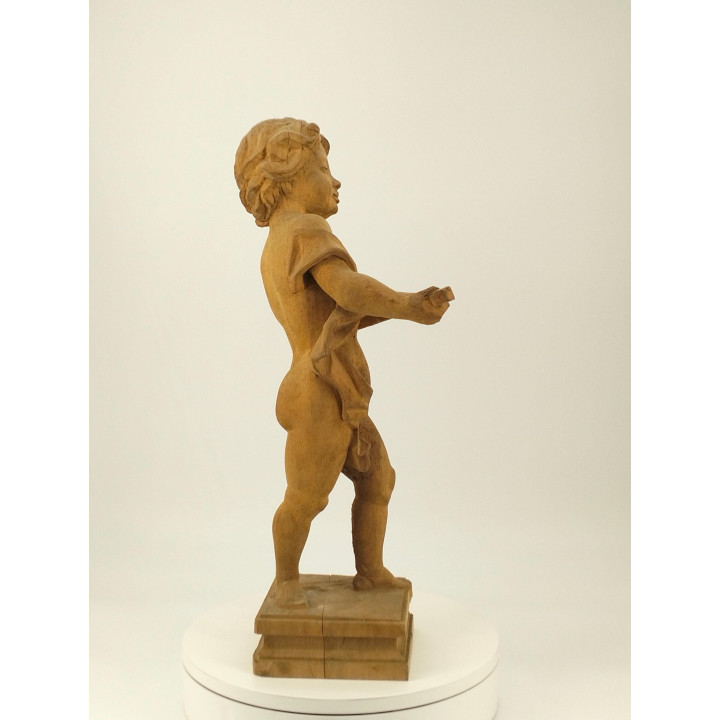
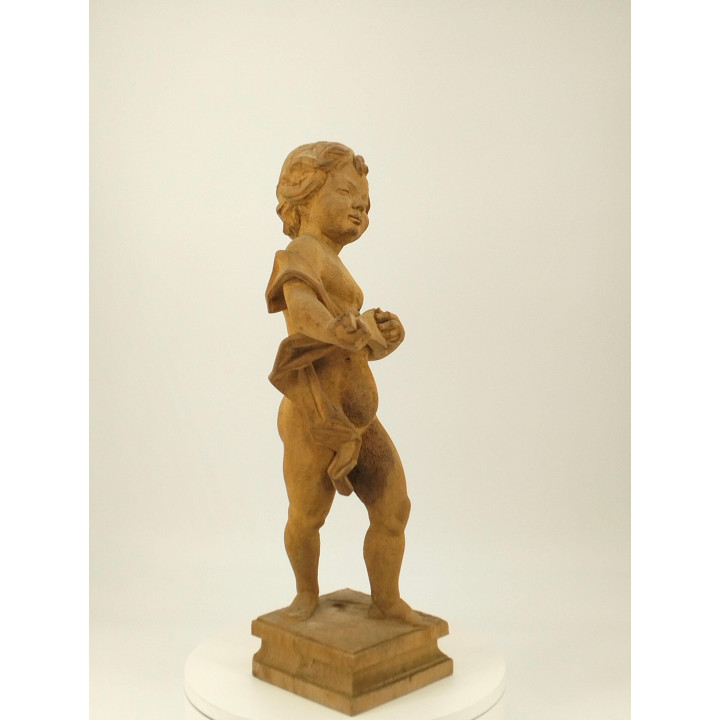
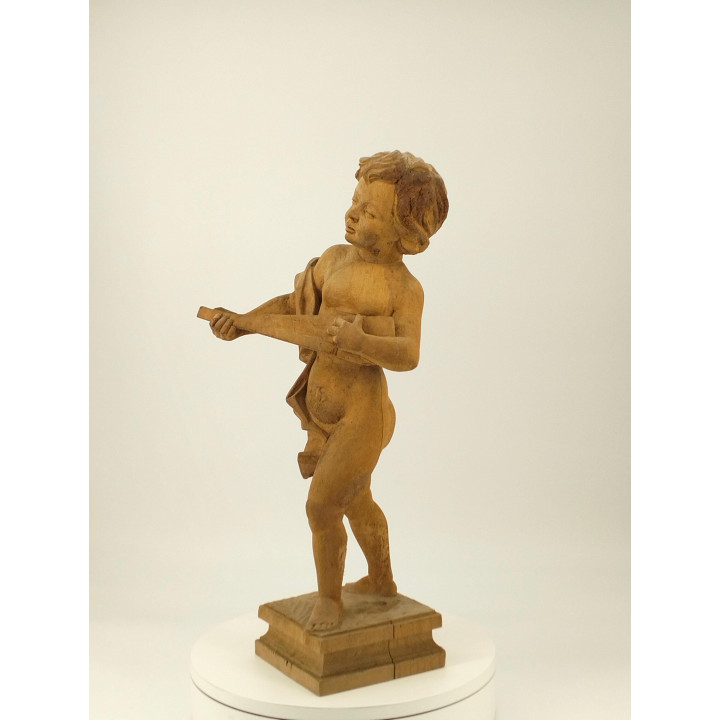
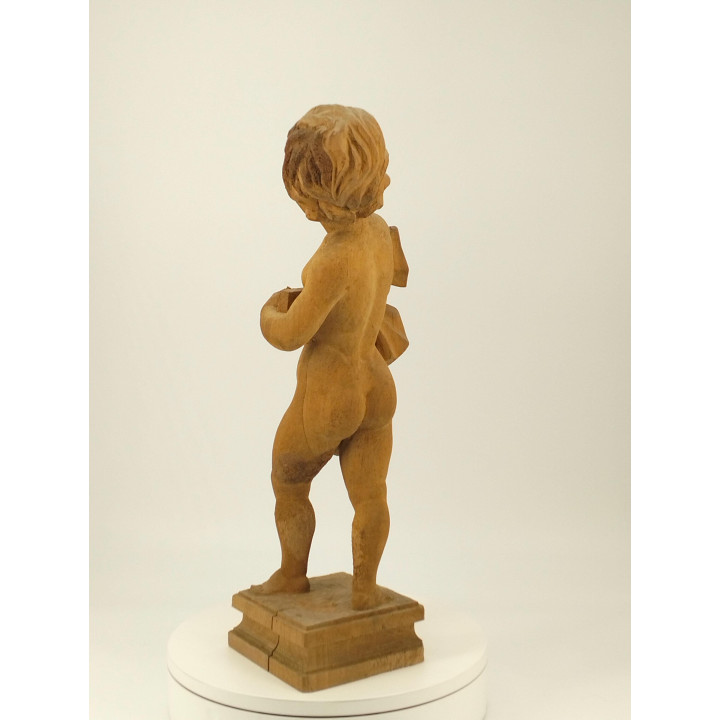
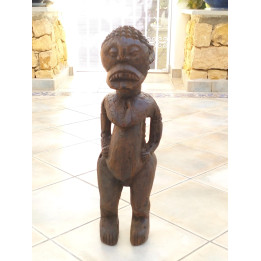
Antique free-standing sculpture representing a cherub or putto, executed in carved wood during the 19th century. The figure shows a winged infant in a dynamic pose, holding a tablet and partially covered by a finely sculpted cloth.
Object History: This piece belongs to the tradition of 19th-century European religious statuary, likely intended for the ornamentation of altarpieces or private devotional spaces. The iconography of the putto, revived from classicism, was widely used in sacred art to symbolize purity and divine companionship.
Details and condition:
- Period: 19th Century
- Technique / Style: Hand-carved wood
- Size: Height 48 cm (18.9 inches), Width 15 cm (5.9 inches), Depth 15 cm (5.9 inches)
- Material: Solid wood
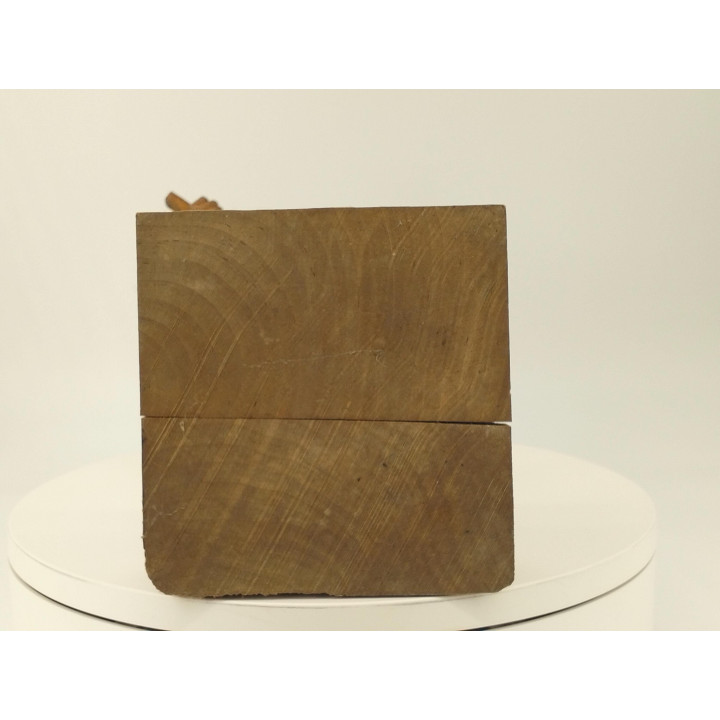
- Condition: Features a deep natural patina. Structural shrinkage cracks are observed in the base, common in pieces of this age due to the natural drying of the wood, which does not compromise stability.
Use and value: An object of high interest for collectors of sacred art and specialists in 19th-century European sculpture, ideal for studies of classical iconography or historical interior decoration.
Legal notice: This product is a vintage collectible item. Due to its age (art. 115 ter. 4 TRLGDCU), the store does not guarantee the preservation of its original performance properties (original scent, texture, durability, safe composition, and others). The product is not intended for direct use/application, is sold "as is", and is exclusively for collection or decorative purposes.




Comments (0)
Your review appreciation cannot be sent
Report comment
Report sent
Your report cannot be sent